
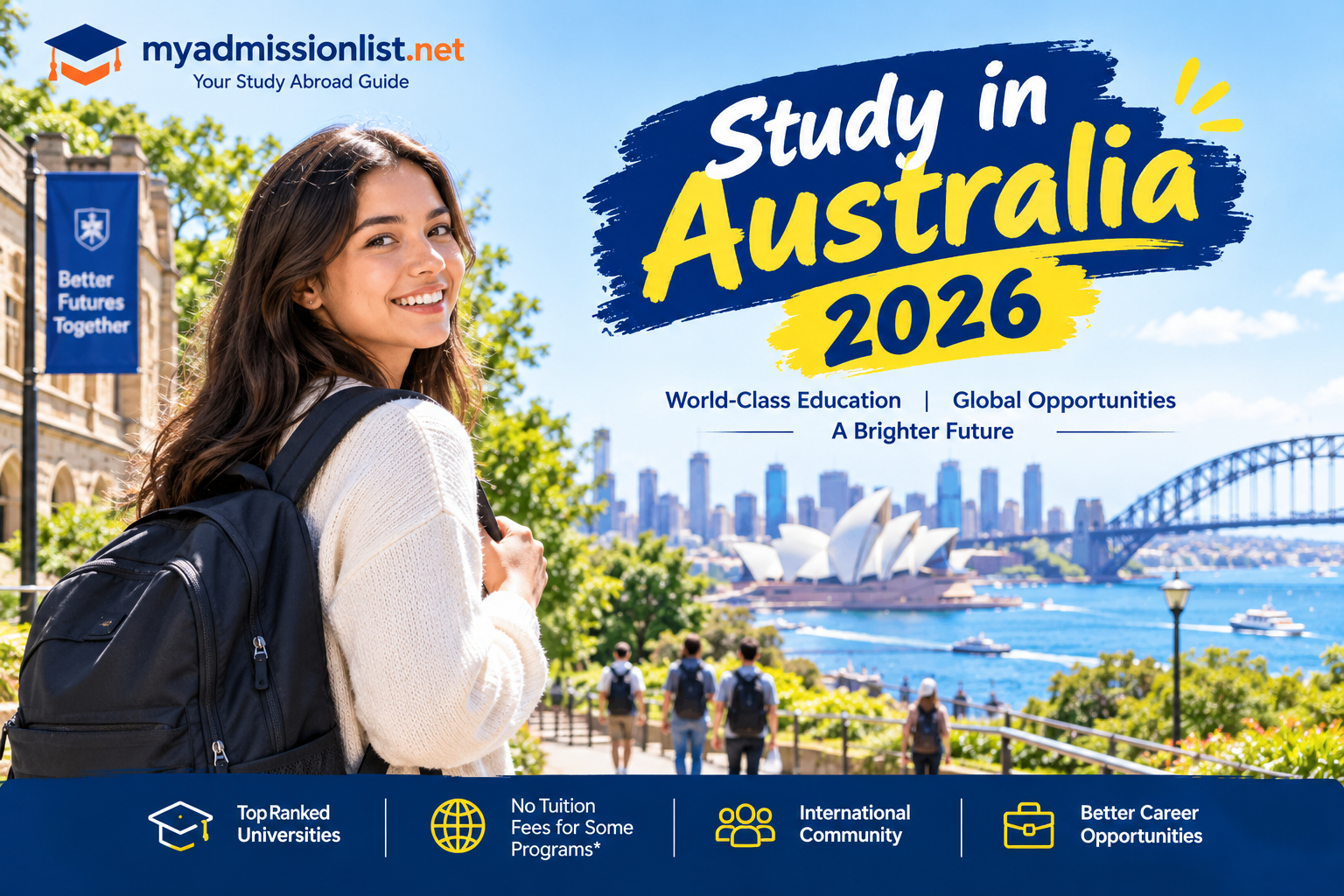
Picture a degree from a university ranked in the world’s top 20, followed by a weekend at the beach. That is the appeal of choosing to study in Australia, and it is why so many students shortlist it every year. Nine Australian universities now rank in the QS world top 100 for 2027, and UNSW is named the country’s best for the first time.
But the costs have changed too. Visa fees rose again in July 2026, and the rules have tightened since 2024.
This guide gives you the real numbers. You will see the top universities in Australia, typical tuition ranges, visa and living costs, and a step-by-step application plan. It works whether you are finishing high school, changing careers, or helping your child compare options.
By the end, you will have a shortlist and a realistic budget. Let’s start with the basics.
Why Study in Australia?
Australia offers English-language teaching, globally ranked universities, and the right to work part-time while you study. There were 37 Australian universities in the latest QS rankings, and 21 of them improved their position.
Common misconceptions:
- “Australia has a hard cap on students.” It doesn’t. The National Planning Level is a prioritisation system for visa applications, not a limit, and any genuine student who meets the requirements can still apply. For 2027 it stays at 295,000 new commencements.
- “Only famous universities are worth it.” Many technology and regional universities offer strong, job-focused courses at lower prices.
Key Takeaway: Australia is open to international students, but it is more expensive and more closely checked than it was a few years ago. Plan early and budget carefully.
Top Universities in Australia
In the QS World University Rankings 2027, UNSW ranks 19th, Melbourne 22nd, Sydney 28th, ANU 29th and Monash 31st. The University of Queensland follows at 40th, UWA at 77th and Adelaide University at 79th. UTS sits at 87th and RMIT at 119th.
| QS 2027 Rank | University | City | Often chosen for |
|---|---|---|---|
| 19 | UNSW Sydney | Sydney | Engineering, technology |
| 22 | University of Melbourne | Melbourne | Law, medicine, social sciences |
| 28 | University of Sydney | Sydney | Broad range, health, arts |
| 29 | Australian National University | Canberra | Research, politics, science |
| 31 | Monash University | Melbourne | Business, pharmacy, health |
| 40 | University of Queensland | Brisbane | Research, life sciences |
| 87 | UTS | Sydney | Tech, design, business |
| 119 | RMIT University | Melbourne | Design, industry-linked degrees |
Group of Eight (Go8)
These are Australia’s eight research-intensive universities: Melbourne, Sydney, ANU, UNSW, UQ, Monash, UWA and Adelaide. They are the most competitive and usually the most expensive.
Technology and Industry-Focused Universities
UTS, RMIT and Macquarie combine solid rankings with strong employer links. They are a good fit if you want practical skills and internships.
Regional and Budget-Friendly Options
Regional universities are often more affordable, and living costs there tend to be lower than in Sydney or Melbourne.
Pro Tip: Check subject rankings, not just overall rank. A university ranked 60th overall can be top 20 for your specific course.
How to Apply
Here is the process to study in Australia as an international student:
- Choose a CRICOS-registered course. Only these courses qualify for a student visa.
- Check English requirements. Most universities accept IELTS, TOEFL or PTE.
- Apply and collect your offer. Submit transcripts, your passport and any required statements.
- Accept the offer and pay your deposit. You will receive a Confirmation of Enrolment (CoE).
- Buy Overseas Student Health Cover (OSHC). You need it before your visa is granted.
- Lodge your Subclass 500 visa online. Include your CoE, financial evidence and Genuine Student statement.
- Wait for a decision. Average processing is around 4–8 weeks.
- Plan your arrival. Book accommodation and flights once the visa is granted.
Important: A refused Student visa application forfeits the full application charge, and the fee is not refunded. Double-check every document before you submit.
Link to: How to Write a Genuine Student Statement for Your Visa
Requirements and Eligibility
- Confirmation of Enrolment from a CRICOS-registered provider.
- English proficiency. Typical benchmarks are IELTS 6.0 for undergraduate and 6.5 for postgraduate study, but each university sets its own score.
- Financial capacity. You must show AUD 29,710 in living costs for 12 months, plus tuition and a return airfare.
- Genuine Student requirement. This test has been in place since March 2024, and it checks your study intentions and personal circumstances.
- Valid OSHC for the full length of your visa.
Cost of Studying in Australia
The cost of studying in Australia has three parts: visa fees, tuition and living expenses.
Visa costs. From 1 July 2026, the standard student visa charge is AUD 2,500 for most primary applicants, AUD 1,530 for each family member aged 18 or over, and AUD 500 for under-18s. Standalone English-language (ELICOS) courses cost AUD 2,050. Graduates also need to budget for the post-study work visa. The Subclass 485 charge is now AUD 5,750.
Tuition. Bachelor’s, master’s and PhD tuition generally falls between AUD 20,000 and AUD 50,000 per year. Group of Eight universities often charge AUD 40,000 or more. Master’s degrees at RMIT, for example, can run AUD 35,000–60,000.
Health cover. Single-student OSHC costs roughly AUD 590–750 per year.
Living costs. Living in Melbourne typically costs AUD 30,000–45,000 a year. Estimated monthly costs by city:
| City | Approx. monthly cost (AUD) |
|---|---|
| Sydney | 1,900 |
| Melbourne | 1,500 |
| Brisbane | 1,400 |
| Canberra | 1,400 |
| Adelaide | 1,300 |
Rent drives most of the difference. A shared room in Sydney can cost AUD 350–450 a week, compared with AUD 200–280 in Adelaide.
Sample first-year budget (mid-range bachelor’s): visa AUD 2,500 + tuition about AUD 30,000 + OSHC about AUD 700 + living AUD 29,710 comes to roughly AUD 63,000. This is an estimate, and your total will vary by course and city.
Pro Tip: Add a 10–15% buffer for flights, laptop, textbooks and exchange-rate swings. Many students underestimate these.
Benefits of Studying in Australia
- Quality education. Nine universities sit in the global top 100, so your degree carries weight.
- Work while you study. Student visa holders can work up to 48 hours per fortnight during term and unlimited hours during official breaks. Research students have different rules.
- Post-study work options. Bachelor’s and master’s graduates may qualify for a 485 visa of roughly 2–4 years depending on nationality, with an age limit of under 35 for most applicants.
- Scholarships. Options include Australia Awards, the University of Melbourne International Undergraduate Scholarship and the Sydney International Student Award.
- Student-friendly cities. Several Australian cities regularly rank among the world’s best for students.
Link to: Best Scholarships for International Students in Australia
Tips for Success
- Apply early. Main intakes are February/March and July. Aim to apply 6–9 months ahead.
- Be honest and specific in your Genuine Student statement. Generic, copied answers are a common reason for refusal.
- Shortlist by total cost, not tuition alone. A cheaper city can save thousands in rent.
- Check scholarship deadlines now. Many close months before the intake.
- Keep financial documents clear. Funds should be traceable and easy to explain.
- Mistake to avoid: exceeding your work-hour limit. Breaking visa conditions can put your future visas at risk.
Pro Tip: Email the university’s international office before applying. Admissions teams often answer course-fit and credit-transfer questions quickly.
Resources and Where to Apply
- Study Australia: the official government guide to courses, costs and visas.
- Department of Home Affairs: current visa fees and rules. Always confirm numbers here before you pay.
- QS Rankings: overall and subject rankings.
- University websites: course fees, scholarships and application portals.
Link to: Study Abroad Checklist: What to Do 12 Months Before You Fly
FAQ
How much does it cost to study in Australia for international students?
Expect roughly AUD 50,000–90,000 per year in total for tuition, visa, health cover and living, depending on your course and city. Regional universities usually cost less than Sydney or Melbourne.
What is the Australian student visa fee in 2026?
From 1 July 2026, the Subclass 500 base charge rose from AUD 2,000 to AUD 2,500. Family members and ELICOS courses have different fees.
Which is the best university in Australia for international students?
UNSW is ranked highest in QS 2027 at 19th globally, with Melbourne and Sydney close behind. The “best” choice depends on your subject, budget and city.
How much money do I need to show for an Australian student visa?
The minimum financial requirement is AUD 29,710 per year for living costs, with extra amounts for a partner or children. You also need to cover tuition and travel.
Can I work while studying in Australia?
Yes. Most coursework students can work 48 hours per fortnight in term time and unlimited hours during official breaks.
Is there a limit on international students in Australia?
Not a hard cap. The 2027 National Planning Level of 295,000 is a prioritisation tool, and genuine students who meet the requirements can still apply.
Can I stay in Australia after graduating?
Many bachelor’s and master’s graduates can apply for the Temporary Graduate (485) visa. The fee has risen sharply in 2026, so include it in your long-term budget.
Final Words
Choosing to study in Australia is a big decision, but with the right plan it is very achievable. Remember these points:
- Nine Australian universities sit in the QS top 100, led by UNSW, Melbourne and Sydney.
- The visa fee is AUD 2,500 from July 2026, and you must also show AUD 29,710 for living costs.
- Tuition typically runs AUD 20,000–50,000+ per year, with Go8 universities at the top end.
- Students can work 48 hours per fortnight in term time and may qualify for post-study work rights.
- Apply early and verify every figure on official government sites.
Your next step is simple: shortlist three universities, calculate your total first-year budget, and check scholarship deadlines this week. Your Australian degree starts with that first plan.
Which Australian city are you leaning towards, and what is your biggest budget worry? Tell us in the comments.
This guide is general information, not migration or financial advice. Fees and rules change, so confirm details with Home Affairs and your chosen university